The tide surges on the Huangpu River, and the eyes of the international biopharmaceutical community are once again focused on Shanghai. From October 13 to 17, the 2025 Shanghai International Biopharmaceutical Industry Week opened as scheduled, marking the fifth consecutive year that Shanghai has built this global platform. This year’s theme, “Linking the Globe, Empowering Industry,” precisely captures Shanghai’s position in the global biopharmaceutical landscape — not only a source of innovation, but also a key hub for the aggregation of factors of production, the alignment of rules and coordinated development.
From laboratory discovery to large-scale production and on to cross-border commercialization, the long chain of biopharmaceutical innovation is highly condensed here. Through the window of the Industry Week, one can glimpse how Shanghai draws biopharmaceutical innovation forces from near and far.
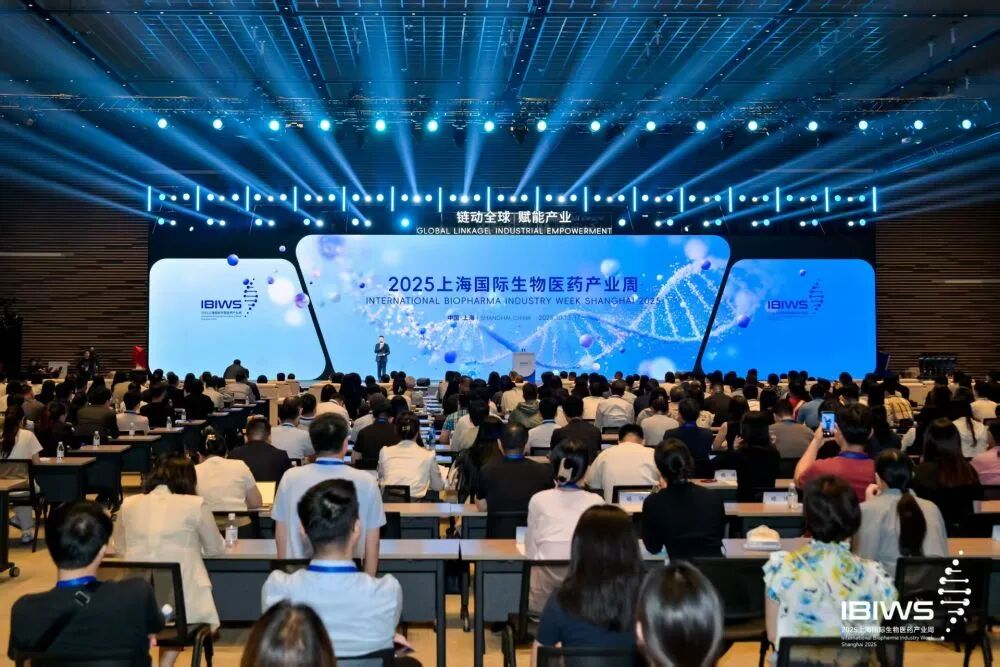
On the site of the 2025 Shanghai International Biopharmaceutical Industry Week (photo provided by interviewees)
1
A leap in platform capacity:
From “showcase window” to “source of innovation”
The influence of a major event depends on whether it can leave behind substantive results that drive industrial development. This year’s Industry Week featured a series of heavyweight signings and unveilings, marking a deepening of its function from “showcase” to “source of innovation.”
At the opening event, Zhu Qigao, deputy director of the Shanghai Municipal Science and Technology Commission, and Huang Xintian, deputy director of Shanghai Customs, unveiled the (Shanghai) Base for Research and Evaluation of Technical Trade Measures in Biomedicine. As a support platform for overcoming trade barriers and providing early warning of trade risks within the WTO framework, it is the only one of its kind in China in the biopharmaceutical field.
Some new platforms remove the bottlenecks in going global, while others reshape the spatial layout. This reporter noted that during the 2025 Shanghai International Biopharmaceutical Industry Week, three high-end medical device clusters in Pudong, Minhang and Jiading were launched simultaneously. This is not a simple physical concentration but the building of an ecosystem in which functions complement one another. Based on the endowments of each district, Shanghai has carried out precise planning of the industrial chain as a whole, placing its pieces across the city so as to raise the overall level of the industry.
The signing ceremony for the Shanghai International Group Biopharmaceutical Industry Ecosystem Cooperation Fund was held at the same time. As of October this year, Shanghai’s biopharmaceutical industry fund of funds had selected 13 sub-funds through market-based processes, achieving a capital multiplication effect of nearly six times. Shanghai International Group said it will continue to improve the building of the biopharmaceutical industry ecosystem and give full play to the guiding function of the fund of funds and the supporting function of its full-life-cycle fund matrix.
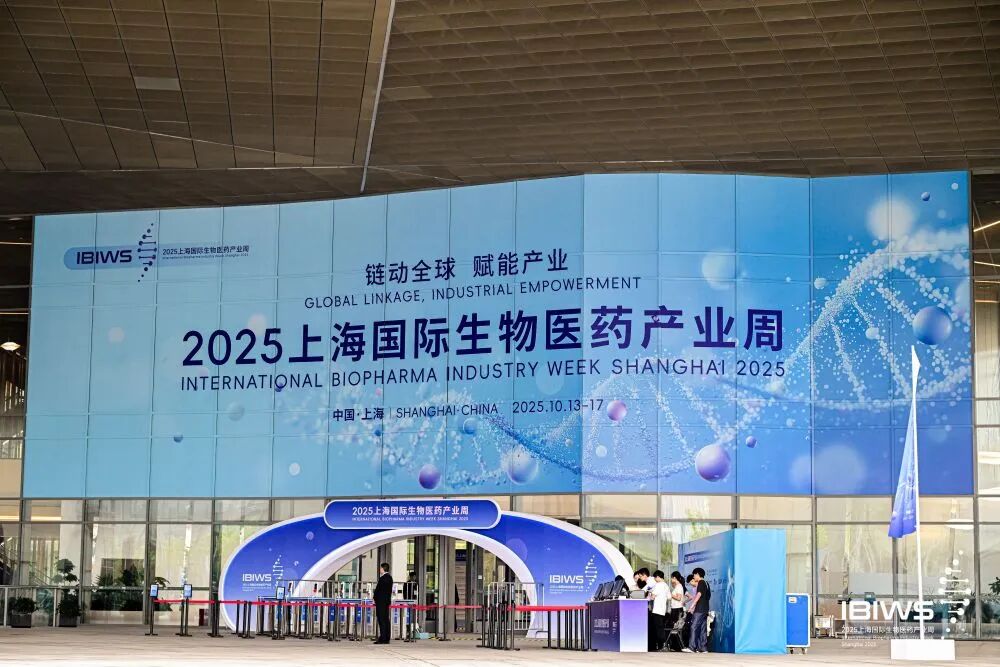
On the site of the 2025 Shanghai International Biopharmaceutical Industry Week (photo provided by interviewees)
2
A surge in the density of ideas:
From “following trends” to “setting trends”
The value of the Industry Week lies not only in how many projects are signed but, more importantly, in pooling frontier ideas, letting them collide and ferment, and leading industry trends.
Liu Houjia, director of the Shanghai Municipal Center for the Promotion of the Biopharmaceutical Science and Technology Industry, explained that the 2025 Shanghai International Biopharmaceutical Industry Week is laid out on a “1+1+15+N” framework: one opening event, one achievements exhibition, 15 thematic forums organized around five directions — generating innovation chains, forging industrial chains, revitalizing chains through policy, strengthening chains with capital and clustering chains through coordination — and N series of themed Industry Week activities held throughout the year.
At the main forum, Lan Gongtao, deputy director of the Drug Registration Department of the National Medical Products Administration, and Gu Jinhui, director of the Medical and Health Science and Technology Development Research Center of the National Health Commission, offered policy interpretations. Gregg Semenza, winner of the 2019 Nobel Prize, Gary Guthart, chairman of the global board of Intuitive Surgical, and Xue Min, chairman of United Imaging Group, delivered keynote speeches. Leading scientists, entrepreneurs and investors in the field, including Xie Xiaoliang, Wang Xiaodong, Angela Kukula and Deng Feng, shared their views on topics such as frontier technological innovation in biomedicine and trends in industrial development.
“High-quality big data is the key to enabling artificial intelligence in biomedicine, and combining biomedical big data with AI will certainly accelerate the new drug development process,” said Xie Xiaoliang, an academician of the Chinese Academy of Sciences and Lee Shau Kee Chair Professor at Peking University. Big data and artificial intelligence have brought about a tremendous shift in the paradigm of biomedical research, which has created new opportunities for the pharmaceutical world in China and around the globe.
It is reported that the Industry Week also released such results as the Blue Book on the Development of the Stem Cell Industry, the Blue Book on the Development of the AI Pharmaceutical Industry, the White Paper on Talent Development in Shanghai’s Biopharmaceutical Industry, and the White Paper on the Development of Shanghai’s Biopharmaceutical Science and Technology Industry (2025 Edition).
3
Moving toward a world-class biopharmaceutical innovation highland
and industrial cluster
The vitality displayed by the Industry Week is rooted in Shanghai’s continuously improving and increasingly substantial biopharmaceutical innovation ecosystem.
Data from the Shanghai Municipal Science and Technology Commission show that since the 14th Five-Year Plan period began, Shanghai’s biopharmaceutical industry has continued to leap forward, with the industry scale growing from 761.714 billion yuan in 2021 to 984.702 billion yuan in 2024, an average annual compound growth rate of 8.94 percent. In the first half of 2025 the industry scale reached 500.566 billion yuan, and it is on the verge of topping the one trillion yuan mark for the year.
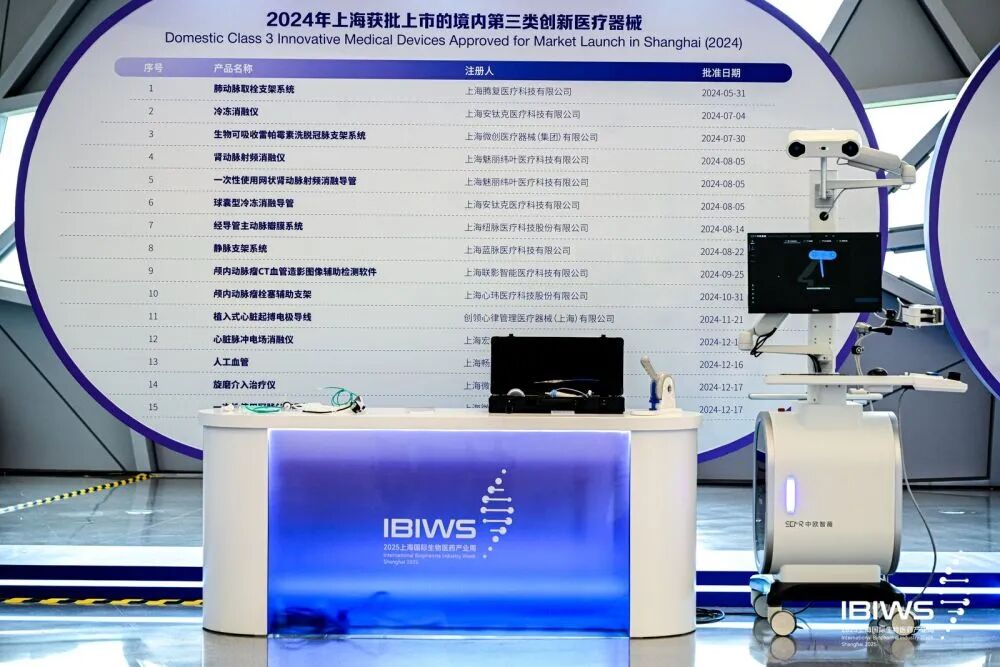
On the site of the 2025 Shanghai International Biopharmaceutical Industry Week (photo provided by interviewees)
Cao Hongming, director of the Biopharmaceutical Division of the Shanghai Municipal Science and Technology Commission and a second-level inspector, said that since the 14th Five-Year Plan period began, the number of Shanghai’s publications in top life science and medical journals such as Cell, Nature and Science, and in the four leading medical journals, has continued to grow. From 2021 to August 2025, Shanghai approved 30 domestically developed Class I innovative drugs, accounting for 17 percent of the national total, and 45 domestic Class III innovative medical devices, accounting for 20 percent of the national total.
At the same time, Shanghai’s biopharmaceutical companies lead the country in license-out transactions, concluding 38 deals worth 30.7 billion US dollars in 2024, which accounts for nearly one third of the national total. Of the world’s top 20 pharmaceutical companies and top 20 medical device companies, 19 each have set up headquarters, manufacturing or R&D centers in Shanghai. Since 2023, a series of high-level projects by companies such as Roche, Daiichi Sankyo, Medtronic, Siemens Healthineers, Hansoh Pharma, Intuitive Fosun and Innovent Biologics have been launched one after another.
Several veterans of the biopharmaceutical field told this reporter that Shanghai has the “optimal” environment for biopharmaceutical industry development, drawing innovation forces from around the world. This “optimal” quality is not measured by land costs alone; rather, it means achieving the highest innovation returns at the lowest overall cost of innovation and entrepreneurship. “Here you can connect every link of the whole innovation chain, and quickly find people, capital and professional clinical research services, so researchers, start-ups and major multinational pharmaceutical companies naturally want to come to Shanghai to live and work in peace and to invest and build plants.”
This reporter learned from the Shanghai Municipal Science and Technology Commission that since the 14th Five-Year Plan period began, Shanghai has issued two regulations, including the Regulations of Shanghai Municipality on the Administration of Drugs and Medical Devices, and a series of policies such as the Several Opinions on Supporting the Innovation-Driven Development of the Whole Chain of the Biopharmaceutical Industry, as well as a number of action plans on synthetic biology, cell and gene therapy, AI plus medicine and other fields; it has organized and implemented science and technology programs under the Science and Technology Innovation Action Plan in gene and cell therapy, synthetic biology, brain-computer interfaces and other areas, promoting frontier breakthroughs and industrial development in biomedicine.
From 2021 to 2024, financing in Shanghai’s biopharmaceutical field totaled 238.372 billion yuan across 1,494 financing events, ranking among the highest in the country. A total of 196 new and improved drug and device products were included in the catalogs of Shanghai’s municipal-level hospitals, effectively promoting the application and uptake of innovative products.
This reporter learned in interviews that, looking toward the 15th Five-Year Plan, Shanghai will do its utmost to accelerate the whole chain — “basic research, incubation and transformation, clinical trials, review and approval, production on the ground, and application and promotion” — continuously strengthen its function as a source of scientific and technological innovation and its role in leading high-end industries, and move faster to build a world-class biopharmaceutical innovation highland and industrial cluster.
Source: Xinhua News Agency
Author: Dong Xue
Editor: Shi