He laid the foundations of modern cryptography and is the only laureate of Chinese descent to win the Turing Award. In 2004 he gave up his US citizenship and returned to China to found the “Yao Class”, which gathers the country’s most gifted computer science students. Last year he created the “Zhi Class” to train artificial intelligence talent. Not long ago, he chose Shanghai as the home of the “Qi Zhi Institute”, devoted to the most advanced research. What will he bring to Shanghai’s AI development next?
He laid the foundations of modern cryptography and is the only laureate of Chinese descent to win the Turing Award. In 2004 he gave up his US citizenship and returned to China to found the “Yao Class”, which gathers the country’s most gifted computer science students. Last year he created the “Zhi Class” to train artificial intelligence talent. Not long ago, he chose Shanghai as the home of the “Qi Zhi Institute”, devoted to the most advanced research. What will he bring to Shanghai’s AI development next?
On the occasion of the 2020 World Artificial Intelligence Conference, Kankan News spoke with this member of the Chinese Academy of Sciences and dean of the Institute for Interdisciplinary Information Sciences at Tsinghua University —Andrew Yao
Ten years from now, where will artificial intelligence be heading?
Andrew Yao: The ultimate ideal of artificial intelligence is a broad, general AI,one that can replace people in many of the high-end tasks they perform today; the most extreme idea is that one day it could even take over the work of scientists —in mathematics, for instance, it could prove new mathematical theorems, and in physics it could tell us where to look for new planets. But we are still very far from truly general artificial intelligence, and we have a great deal of work ahead of us.
What will be the breakthrough that takes AI from weak to strong, from narrow to general?
Andrew Yao: Artificial intelligence is the high ground of science and technology: whoever masters it holds an immense advantage in economic and social development. China therefore must achieve a breakthrough in AI as quickly as possible and secure its place in the world. We all know that China’s application of AI absolutely keeps pace with many parts of the world, and even leads it, yet our basic research on AI is still relatively thin.So we must train talent, give it a good environment and encourage it to pursue basic research — that is the only way to drive future breakthroughs in AI.As for the final outcome — in which corner of the world the most important breakthrough will appear — I do not think we can know, but we would be delighted to see it. Our government attaches such importance to scientific development that I believe once we begin, results will spring up like bamboo shoots after rain, and the whole world will be astonished.
After this pandemic, the world order is shifting again. In the field of AI, how should China face these challenges and pressures?
Andrew Yao: Our greatest pressure comes from basic research: today we are still unable to train the world’s best AI doctoral students,we need a very mature system and a sufficient number of top-tier people before such doctoral students can emerge. That is why we now need to attract talent — people who have been working for five or ten years and are already among the best — and bring them home. In China they can not only produce scientific results that keep us abreast of the world not just in applications but in original research; at the same time, inside our universities, they can train the finest doctoral talent.Once this system is connected end to end, we will have a self-sufficient cycle of talent. I believe that only when we are self-sufficient can we truly open up to the world and make the whole world willing to exchange with us.
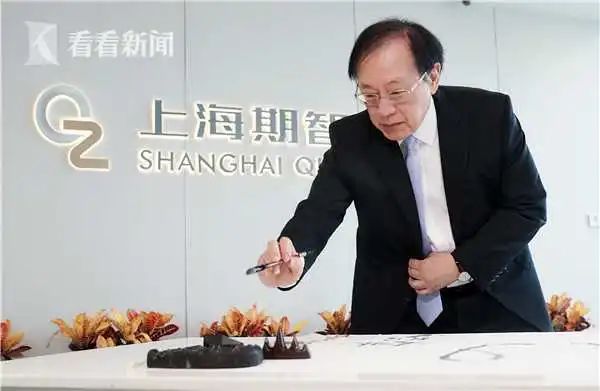
In 2004 you gave up a tenured professorship at Princeton and boarded a flight home. What prompted that decision?
Andrew Yao: Some twenty years ago you could see that in the top five computer science departments in the United States there were very few professors of Chinese descent — I could count them on one hand. I felt strongly that China too should cultivate people who are genuinely innovative in the international academic world, and that was a major reason why I gladly accepted when Tsinghua invited me back. Our students are first-rate when they finish high school, yet after four years at university they come out rather lacking in confidence, unable to match students from the world’s top universities. Seeing that hurt me, and I felt a responsibility.
From founding the “Yao Class” for computer science talent to founding the “Zhi Class” for AI talent, what was your original intention? Has it met your expectations so far?
Andrew Yao: At Tsinghua we can recruit the very best undergraduates at the top of the world’s pyramid. These students can study anything — biology, mathematics, physics, computer science. Ours is an age of interdisciplinary work,and what I have done at Tsinghua is to give students the chance to encounter different disciplines and encourage them to choose the direction they love.Technically speaking, it is very simple: all you need is to give them a way of teaching, and teaching materials, that keep pace with the times, with the teacher serving as a model so that they know Chinese people can do this too. Then, with these top students together, they push one another and keep getting better.
At the beginning we could offer only a handful of courses, and gradually we recruited more professors. What makes me very happy is that, in the sixteen years since I returned, I suddenly realised one day that we already have more than ten graduating classes, and many of our graduates now teach at the top five universities in the United States.I can say that China’s leading universities and their undergraduates have now reached the best international standard.
What are your expectations for the Qi Zhi Institute, which you personally set up?
Andrew Yao: My idea is that the institute’s core members will come from Tsinghua, joined by Shanghai Jiao Tong University, Fudan and Tongji, and perhaps other first-class universities later. My hope is that the projects we carry out here will be the most advanced and most creative in the world, and that in ten years our institute will rank alongside the world’s top five research bodies in computing and artificial intelligence.If you ask me where the world’s best AI is, Shanghai will certainly be one of the answers. Of that I am utterly convinced — and we will not have to wait ten years; I think in five years everyone will already see the growth.
Why did you choose Shanghai as the home of the Qi Zhi Institute?
Andrew Yao: Shanghai genuinely respects scientists, and it is pragmatic, efficient and single-mindedly devoted to getting things done, without a great many rigid rules — though that takes courage and a willingness to shoulder responsibility. Personally I think that for a scientist who wants to accomplish something, the best approach is to give him the resources he needs and the greatest tolerance, so that he can go ahead freely, while at the same time giving him a responsibility. It is like the military pledge of ancient times; I can sign such a pledge today — if I have not delivered in ten years, I really will retire from the scene.
Beyond its institutional advantages, Shanghai also has a humanistic advantage. Ibelieve Shanghai has an immense appeal: it lets a truly creative person explore and discover in a very comfortable environment.I have told people before that a creative scientist is like a supercar: it has not only third and fourth gear but fifth, sixth and seventh. The difference between a top scientist and a good one is that the top scientist can reach seventh gear — provided you give him open country in which to run free.
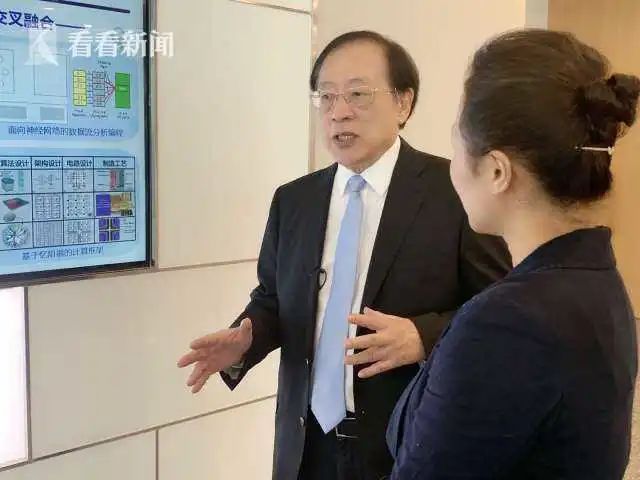
Why did you choose Shanghai as the home of the Qi Zhi Institute?
Andrew Yao: Shanghai genuinely respects scientists, and it is pragmatic, efficient and single-mindedly devoted to getting things done, without a great many rigid rules — though that takes courage and a willingness to shoulder responsibility. Personally I think that for a scientist who wants to accomplish something, the best approach is to give him the resources he needs and the greatest tolerance, so that he can go ahead freely, while at the same time giving him a responsibility. It is like the military pledge of ancient times; I can sign such a pledge today — if I have not delivered in ten years, I really will retire from the scene.
Beyond its institutional advantages, Shanghai also has a humanistic advantage. Ibelieve Shanghai has an immense appeal: it lets a truly creative person explore and discover in a very comfortable environment.I have told people before that a creative scientist is like a supercar: it has not only third and fourth gear but fifth, sixth and seventh. The difference between a top scientist and a good one is that the top scientist can reach seventh gear — provided you give him open country in which to run free.
Behind this costly technology, could there be hidden concerns about commercial manipulation and technological monopoly?
Andrew Yao: We often go so far that we forget our original purpose, especially in the field of AI. So in which direction should human society head? I do not think it necessarily has to become entirely efficiency-driven,and the ultimate goal of human society is not necessarily to produce ever more material goods at ever lower cost.I think it is fortunate that we have not gone that far; otherwise today’s technology would put more tools in the hands of a few. We still have a chance to let more voices be heard, which is why I believe checks and balances from social forces matter greatly at this moment.
Source: Kankan News Knews
Reporters: Mao Yan, Ding Tao; camera: Lü Xinquan, Li Xiang