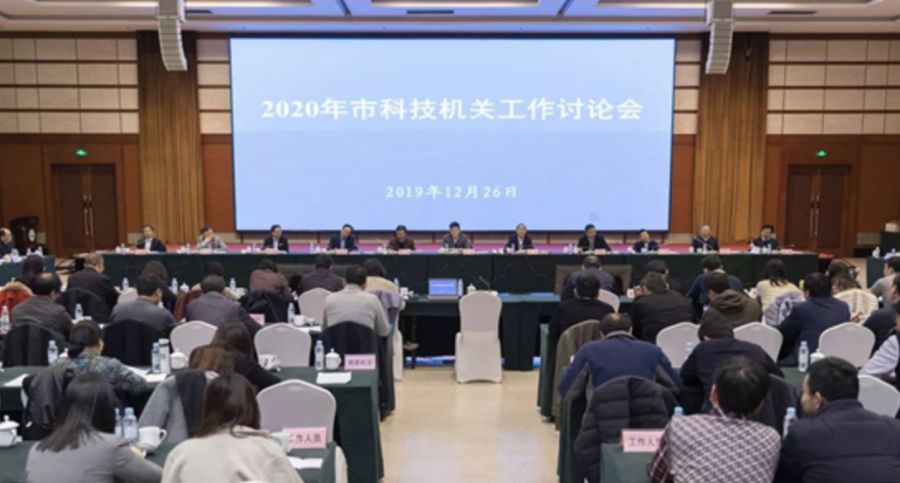
The 2020 Spring Festival was no ordinary Spring Festival: the whole country was working hard to fight the novel coronavirus. In Shanghai there is a special team that could not take part in front-line treatment of the novel coronavirus, yet has not forgotten its mission as a medical institution. Its members stand firm at their posts and do their utmost to contribute to Shanghai’s medical security. They are the medical team of Shanghai Jiahui International Hospital, Shanghai’s first foreign-invested comprehensive international hospital.
Caption: the Jiahui special task force for the prevention and control of the novel coronavirus has been established; its members include overseas doctors who took part in the fight against SARS in 2003. Source: photo supplied by the hospital
The 2020 Spring Festival was no ordinary Spring Festival: the whole country was working hard to fight the novel coronavirus. In Shanghai there is a special team that could not take part in front-line treatment of the novel coronavirus, yet has not forgotten its mission as a medical institution. Its members stand firm at their posts and do their utmost to contribute to Shanghai’s medical security. They are the medical team of Shanghai Jiahui International Hospital, Shanghai’s first foreign-invested comprehensive international hospital.
“On the evening of 20 January, after we received word that Shanghai had confirmed its first case of novel coronavirus infection, we realised the situation was very serious, so on the 21st we set up the Jiahui special task force for the prevention and control of the novel coronavirus. Its members include overseas doctors who took part in the fight against SARS in 2003. We pooled our experience and suggestions and drew up work plans, supply arrangements and other plans, adjusting our work every day according to the situation so as to respond to the constantly changing epidemic,” said Sun Xiuying, a member of the Jiahui International Hospital special task force for the prevention and control of the novel coronavirus.
Offline: strict checks at every level, so that not a single “suspected” patient is missed
“Hello, please cooperate with the temperature check first. Do you have any respiratory symptoms, such as a cough? Have you been to Hubei Province in the past 14 days, or been in contact with a confirmed or suspected novel coronavirus patient? Have you any history of cluster onset?” At the emergency entrance of Jiahui International Hospital, the triage nurse questions everyone entering the building carefully and patiently, and only after the possibility of novel coronavirus infection has been provisionally ruled out are patients taken to the corresponding consulting rooms.
It is understood that, in addition to strictly complying with the notices issued by the Xuhui District Health Commission, Jiahui International Hospital also carries out triage in line with its own situation, and in later consultations will perform more detailed examinations based on patients’ symptoms. The hospital says Jiahui immediately formed a panel of more than 20 specialist doctors (15 of them foreign physicians) as members of the Jiahui special task force for the prevention and control of the novel coronavirus. One of its leaders, Dr David Krason, practises jointly at Massachusetts General Hospital and Jiahui International Hospital and is also an infectious disease specialist; the other leader, Dr Young Ahn, is an intensive care specialist. Together they will lead the doctors of the Jiahui International Hospital special task force to fight this novel coronavirus alongside Shanghai.
Speaking of the outbreak, Dr Young Ahn said: “I have seen a great deal of public panic on the internet, and I want to say to friends in Wuhan, in Shanghai and across China: at this moment, we in Shanghai, China, are working hard together with all of you. Hardship will not defeat us; the epidemic has given us amazing strength and the courage to overcome difficulties. We will fight ever more bravely, and we will certainly defeat this novel coronavirus. At Jiahui we are working hard together with everyone.”
Online: free online consultation launched, with bilingual service offering convenience to foreign residents
The rapidly spreading epidemic places an enormous burden on medical institutions, and patients rushing to hospital as soon as they have symptoms can easily cause cross-infection. Recently, at the initiative of the Shanghai Municipal Health Commission, a number of public hospitals have opened online consultation platforms. But many foreign nationals also live in Shanghai, and the language barrier makes it difficult for them to complete ordinary online consultations. In view of this, Jiahui International Hospital has launched a ‘bilingual free online consultation’ service to ease overcrowding and the excessive medical workload, providing disease education and medical advice to residents who need it, and also giving some help to foreign nationals living in Shanghai.
After a week of preparation, Jiahui International Hospital’s “online consultation” service officially opened on 30 January. Since then it has expanded from general practice and paediatrics to a bilingual service covering general practice, internal medicine, paediatrics, ENT, ophthalmology, psychology and other departments. Within a few days, 1,870 users had entered the Jiahui International Hospital online consultation channel and 197 online consultations had been completed, 20% of them with foreign nationals.
The hospital says residents can reach the consultation channel through the Jiahui Medical WeChat official account, and doctors will answer each question as quickly as possible. Beyond basic consultation, the service also offers online education about the novel coronavirus and psychological support; patients can enter keywords to obtain the relevant information, and those who wish to consult a doctor can submit a question and promptly receive a doctor’s professional answer.
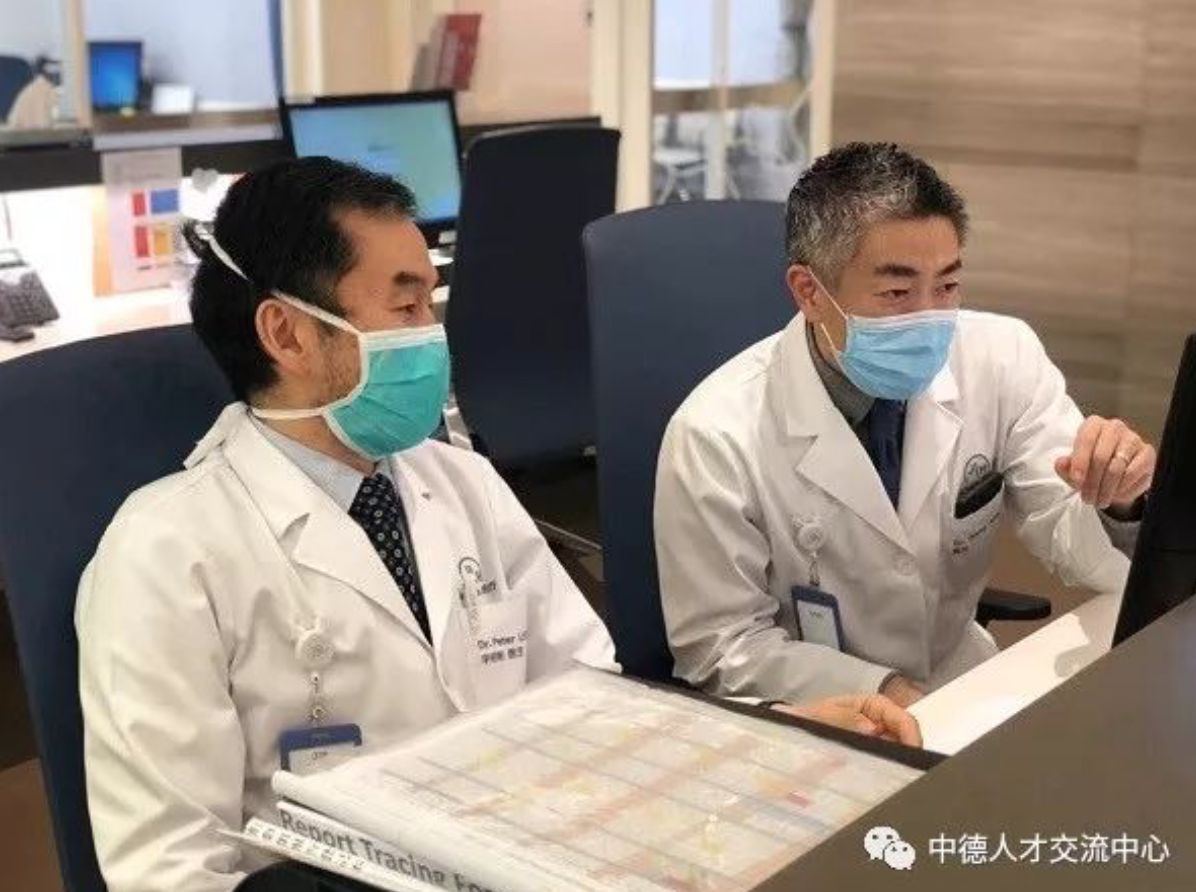
Caption: foreign doctors in Shanghai play their part, working with Shanghai to fight novel coronavirus infection. Source as above
Doctors join public-interest efforts on their own initiative
Beyond the online and offline anti-epidemic work organised by the hospital, Jiahui International Hospital also has doctors devoted to public welfare. For example, Cheng Qi, a psychotherapist at the hospital, graduated from the University of Pittsburgh in the United States and has extensive experience in child medical counselling; outside her own work she volunteers on the front line of a public-interest psychological hotline run by Beijing Normal University, serving people across the country anxious about the epidemic. Other doctors use their Weibo and WeChat official accounts to publish educational content and videos, spreading knowledge of the novel coronavirus among the public; although not on the front line, they hold the public in their hearts and put their professional knowledge at the service of all.
“At this moment, although Jiahui is not one of Shanghai’s 110 designated fever clinics and cannot take part in front-line treatment of the novel coronavirus, as the first international hospital established after the implementation of Shanghai’s 50 measures for the health service industry, Jiahui has always received support and help from the Shanghai government in many respects. Faced with this huge epidemic, Jiahui hopes to play the role that an international medical institution can, ease the pressure on Shanghai’s medical system and work with Shanghai to fight novel coronavirus infection,” said Xiang Naiqiang, Chief Medical Officer of Jiahui Medical and Medical Director of Shanghai Jiahui International Hospital.
Source: Sino-German Talent Exchange Centre