With 200 days to go, preparations for the first China International Import Expo are shifting into high gear, and experts and scholars from relevant industry associations and trade research institutes in Shanghai have taken the lead in assessing the “Import Expo” from the perspective of their own fields.
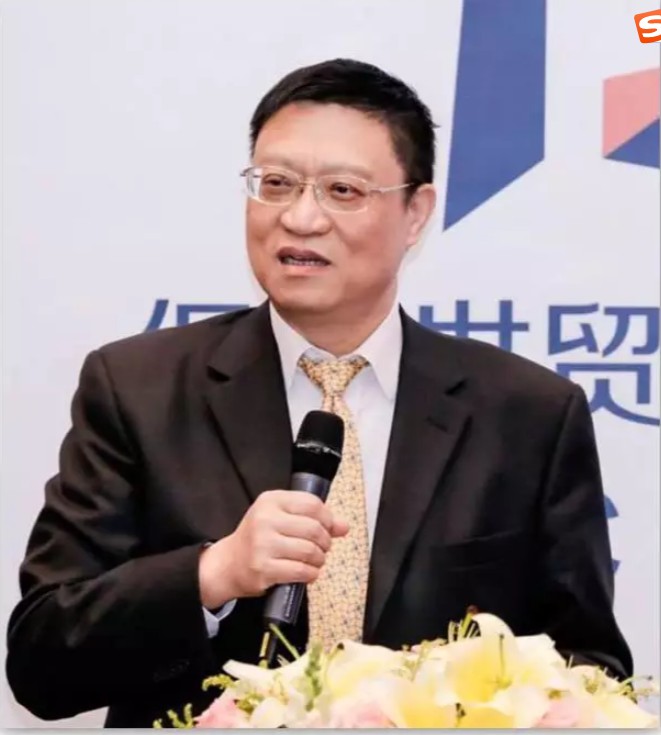
Chen Xianjin: The impact of these six days on Shanghai will be incalculable
Chen Xianjin, President of the Shanghai Convention and Exhibition Industry Association
○ Opportunities for China’s exhibition industry
The China International Import Expo links the exhibition industry with the country’s diplomatic strategy and national development strategy. For those of us who work in the exhibition business, this is undoubtedly a source of great excitement and honour. The state now has a higher and more comprehensive understanding of the place of the exhibition industry: it can foster a modern economic system and an open society, and it is one of the landmark events of China’s economy and society opening up on their own initiative.
○ The challenges for Shanghai
The Import Expo has chosen Shanghai as its venue, which shows that Shanghai’s exhibition industry rests on a solid foundation and leads the country in both hardware and software.
Hosting an exhibition of such a high standard also poses many challenges for Shanghai. After all, the Import Expo is something new in terms of content, format and scale. In the past we held the Export Commodities Fair in Guangzhou for many years and had a mature model, but an expo of this size devoted specifically to imports is relatively rare both in our country and around the world. What to exhibit, how to operate it, and what rules govern it — this whole series of questions has been thrown down before Shanghai, and it is a challenge for the departments that will actually run the exhibition, for exhibitors and even for ordinary Shanghai citizens.
The schedule is tight, the task is heavy and the positioning is high, so we need to mobilise the strength of the whole city and even the whole country, so that everyone pulls together and concentrates on making the exhibition a success, showcasing the image of Shanghai and the image of China.
○ The long-term impact
The first China International Import Expo will not run for long — from 5 to 10 November 2018, six days in all. Yet the ripple effects of those six days across Shanghai society will be enormous; the indirect impact on the economy, on social development and on culture is incalculable. The spillover effects of the Import Expo will not be confined to Shanghai itself: the Yangtze River Delta region and indeed the whole country will be able to share in the development opportunities and achievements it brings.
Huang Jianzhong: China firmly demonstrates its commitment to globalisation through action
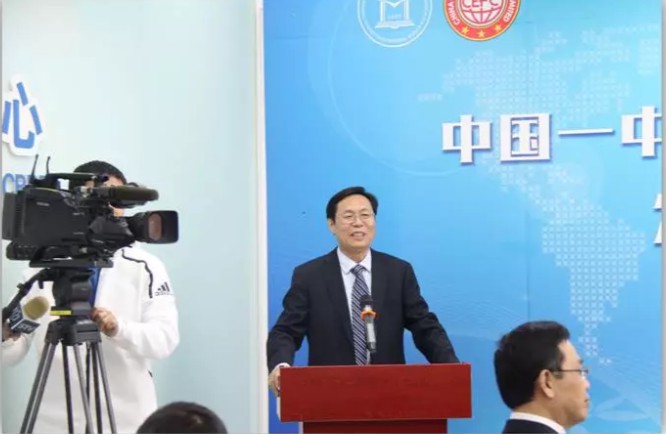
Huang Jianzhong, President of the Shanghai International Trade Association; Dean of the School of International Business and Economics, Shanghai University of International Business and Economics
○ A positive force for globalisation
By holding the China International Import Expo, China is firmly demonstrating through action its commitment to globalisation; in the years to come China will provide locomotive-like driving force for the sustained development of the world economy. Under the current international circumstances, this move shows even greater boldness and sense of responsibility. At a time when the tide of anti-globalisation is rising, trade protectionism is rearing its head and all parties are putting exports and employment first, positive forces are especially needed to keep globalisation moving forward.
Moreover, China will not hold this event only this year: it will hold it year after year. Such courage and sense of responsibility truly reflect China’s remarkable breadth of vision and the determination of the Chinese government to promote the building of a community with a shared future for mankind.
○ “Opening up forces reform”
For China itself, this will also be a marker of a new departure after 40 years of reform and opening up. Holding the Import Expo will further set the benchmark for reform and opening up; the external competition it introduces will produce spillover effects and, in a sense, play a role in “making opening up force reform”, while also helping the integration process of the entire Yangtze River Delta. For the Yangtze River Delta and the whole Yangtze River Economic Belt, it will mean more comprehensive alignment within a more open framework.
Zhao Peiwen: A comprehensive test for Shanghai’s business environment
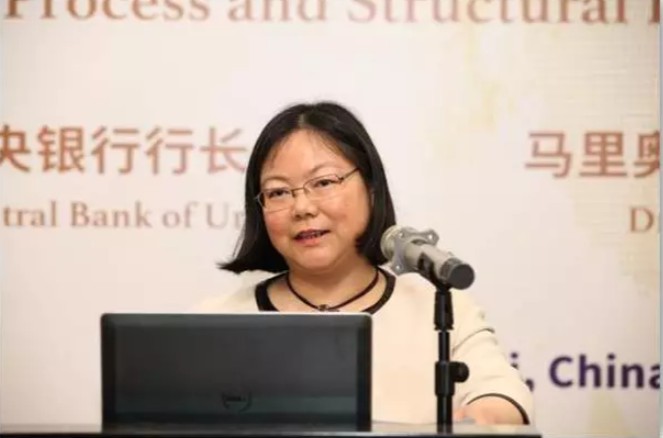
Zhao Peiwen, Deputy Director of the Institute of World Economy, Shanghai Academy of Social Sciences
○ Broad vision, profound purpose
This expo has rich content and many venues, with dedicated national image pavilions and trade and investment pavilions, and it will also host the Hongqiao International Trade Forum, combining theory with practice and providing a new platform for China to voice its construction of a new system of an open economy; it will also bring a series of positive effects in its wake. It will demonstrate China’s unremitting efforts in customs and trade facilitation, investment facilitation and intellectual property protection.
The World Bank’s global assessment report on the business environment uses Beijing and Shanghai as its two sample cities, with Shanghai accounting for 55% of the weight. Holding the expo will therefore also be an important window through which the world observes China’s business environment, and we answer certain international commentary with facts.
○ A window on the world
2018 is the year of business environment reform in Shanghai, and the four major brands — “Shanghai Services”, “Shanghai Manufacturing”, “Shanghai Shopping” and “Shanghai Culture” — are being promoted with full force, raising the city’s international competitiveness and influence. The China International Import Expo will provide one-stop transaction services both online and offline, as well as facilitation of customs clearance and inspection and quarantine; this will be a comprehensive test of Shanghai’s business environment. Conversely, through the expo Shanghai will also gain a better understanding of international trends: “this gives Shanghai a window on the world”, a platform that lets us see the world.
Zhang Min: Spillover effects for the Yangtze River Delta and the whole country
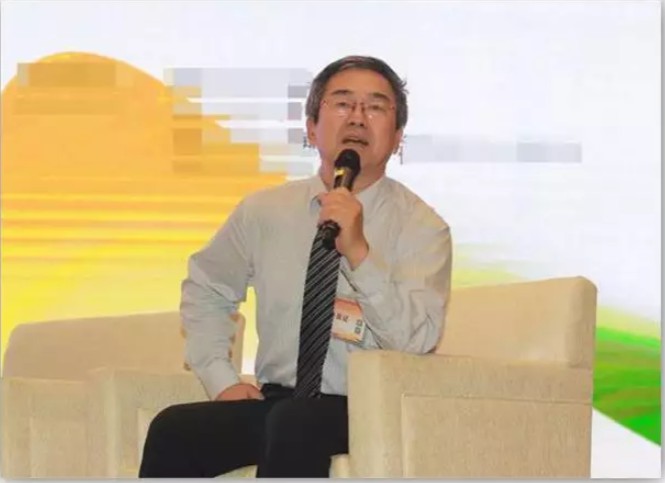
Zhang Min, Executive Director of the Shanghai Exhibition Research Institute; Professor at Shanghai University
○ Helping Shanghai build a “shopping paradise”
First, the Import Expo is a huge boon for the building of Shanghai as an international trade centre, lifting the energy and influence of the trade centre to a new level. Second, holding the Import Expo helps Shanghai build an internationally competitive “shopping paradise”. Third, because the Import Expo will be held periodically, it will drive the upgrading and transformation of manufacturing in Shanghai and across the country, and of the three sectors of the economy: through high-level, large-scale opening up, and under the pressure of the comparative advantages of imported goods from various countries, China will benchmark itself against international standards more widely and more promptly, continually raising the innovative capacity, product quality and international competitiveness of its own brands.
○ Promoting Yangtze River Delta integration
The Import Expo will also bring spillover effects to the Yangtze River Delta region and indeed the whole country, further promoting integration of the Delta. In the flow and exchange of trade, goods, talent, information, capital and technology, Shanghai will be linked more closely with its surrounding areas, transport will become more convenient and communication easier. This is a new opportunity both for Shanghai’s own development and for the development of the Yangtze River Delta region.
Yin Desheng: Urban development in the context of a major declaration of proactive market opening

Yin Desheng, Dean and Professor of the School of Economics, East China Normal University
○ From an export-oriented strategy to equal emphasis on imports and exports
Shanghai has always been at the forefront of China’s reform and opening up. It is working hard to become a science and technology innovation centre with global influence and an outstanding global city, and is currently in a critical period of economic transformation and high-quality development. In the future, high-quality development of the Shanghai economy cannot be achieved without the support of high-quality imports; it requires a more open posture and more open action.
The China International Import Expo aims to expand imports and to open the Chinese market further to the world. While strengthening Shanghai’s economic transformation, it shows the world a new round of Shanghai’s opening up, especially the opening up of high-end manufacturing and advanced services, and it greatly facilitates the efforts of foreign companies to tap China’s huge consumer market. Companies in relevant industries abroad are excited and are eager to seize the opportunity of the first China International Import Expo to establish a foothold in the Chinese market.
○ “Six days + 365 days”
Building a year-round exhibition and trading platform for the China International Import Expo on a “six days + 365 days” basis is about creating an “expo that never closes”: through the platform’s professional services it helps goods, services and technologies from around the world enter the Chinese market smoothly, amplifying their driving and spillover effects. The spillover effects this platform will bring to Shanghai, the Yangtze River Delta and indeed the whole country cover four aspects: first, the sharing effect of a trade platform; second, joining forces to promote the “Shanghai Shopping” brand and provide high-quality consumer goods and services; third, joining forces to promote the “Shanghai Manufacturing” brand; and fourth, joining forces to promote the “Shanghai Services” brand.
○ Significance for building a modern economic system
First, the China International Import Expo helps increase imports of capital goods in Shanghai’s advanced manufacturing sector, and helps upgrade Shanghai’s manufacturing and enhance its global competitiveness. Second, it helps increase imports of products in Shanghai’s services sector and accelerates the opening up of the services industry. Finally, it will help Shanghai create a more attractive investment environment.
Shanghai will further strengthen its urban positioning, especially as an outstanding global city, improve all kinds of urban facilities — particularly intelligent facilities — and the social and cultural environment, promote city marketing, combine event marketing with city marketing, and create a new calling card for China’s opening up and for a global “market for sellers”.
Urban management in Shanghai will also face new and higher demands as a result of holding the China International Import Expo. First, strengthen the building of a high-level public service system; second, create a transparent, fair and efficient import trading market environment; third, fill in the core functions of a central city of the international exhibition industry; and fourth, establish and improve the support system for the China International Import Expo.
Zou Lei: A landmark project of high-level opening up
Dr. Zou Lei, Party School of the CPC Shanghai Municipal Committee; Shanghai Research Centre for Xi Jinping Thought on Socialism with Chinese Characteristics for a New Era
○ Not a simple copy of the “Canton Fair”
Over the 40 years of reform and opening up, China has given full play to its comparative advantages and has actively and rapidly integrated itself into the tide of global economic cooperation, steadily widening the intensity, depth and breadth of its opening up. This has not only made an important contribution to steady growth of the world economy, but has also enabled China to grow into the world’s second-largest economy, largest industrial country, largest trader in goods and largest holder of foreign exchange reserves. China’s economic achievements today owe much to opening up; the open international environment has forged the competitiveness and risk resistance of the Chinese economy.
In the new era, with what posture and with what intensity will China advance its opening up? This is a question of great interest to the international community. The report to the 19th National Congress of the Communist Party of China stressed that China’s door will not be closed and will only open wider and wider. At the opening ceremony of the Boao Forum for Asia Annual Conference 2018, President Xi Jinping reaffirmed this firm position of China.
It is estimated that in the next five years China will import US$8 trillion of goods and absorb US$600 billion of foreign investment. Proposing the China International Import Expo is precisely a “landmark project” among a series of measures to advance a new round of high-level opening up; behind it lie supporting policies for trade facilitation and institutional innovation covering tariffs, customs clearance, import inspection, property rights protection and market regulation, among other areas.
○ A genuine “Chinese creation”
As the world’s first large-scale expo with imports as its theme, it is a new type of trade cooperation vehicle that brings together online and offline, short-term and long-term, goods and services, central and local, government and market, “buying globally” and “selling globally”. In the long history of world trade there is no precedent to follow: it is a genuine “Chinese solution” and “Chinese creation”.
This marks that China has gradually grown from a “participant” and “integrator” in the world economy into a “shaper” and “leader”. Its leading role is embodied at three levels: first, at the material level, establishing convenient green channels between quality goods and services from various countries and Chinese consumers; second, at the institutional level, providing new institutional arrangements to remedy the governance deficit of the world economy; and third, at the conceptual level, reaffirming and strengthening the idea of international trade cooperation focused on openness, multilateralism, freedom, facilitation and mutual benefit.
○ An inclusive, open cooperation platform
In recent years China has provided the international community with a series of public goods aimed at promoting inclusive development — the Belt and Road Initiative, the Asian Infrastructure Investment Bank, the China-Europe Railway Express and others — winning wide attention and praise. Proposing the China International Import Expo is another inclusive, open cooperation platform that China, having developed itself, has built to promote common development among countries, taking the opening of its own market as the entry point.
As planned, the China International Import Expo consists of two parts, a comprehensive national trade and investment exhibition and a business exhibition for enterprises, and it will also hold an international trade forum together with the World Trade Organization, the United Nations Industrial Development Organization and others. It is expected not only to give full play to the function of trading goods and services, but also to provide a stage for countries to showcase their national image and for all parties to discuss the overall plan for international trade development. It is worth noting that China will also waive exhibition fees for the least developed countries, giving them the opportunity to take part in global economic and trade cooperation and to strengthen their capacity for self-reliant development.
○ Leading the upgrading of consumption and industry
On the one hand, as the world economic landscape changes and the Chinese economy shifts to a stage of high-quality development, domestic demand and consumption have become important drivers and sources of potential for China’s economic growth, and the shape of China’s foreign trade is gradually shifting from being export-dominated to a balanced development of imports and exports.
On the other hand, after 40 years of reform and opening up, the people’s aspiration for a better life has entered a new stage, and consumer demand is becoming increasingly diversified and differentiated. In recent years, Chinese tourists’ spending abroad has repeatedly hit new highs and cross-border e-commerce has flourished — direct expressions of this rapidly growing demand. In this sense, the huge domestic consumer market is an important variable affecting the future direction of the Chinese and world economies.
Proposing the China International Import Expo is not a so-called expedient or passive move taken in response to public pressure over trade imbalances, but a proactive action to lead the upgrading of consumption and industry by reasonably expanding imports of quality goods and services, especially advanced technology and equipment, key components and quality consumer goods. When the time comes, not only will ordinary people’s desire to “shop” be satisfied, but Chinese enterprises will also encounter new opportunities for transformation and innovation.
Source: China International Import Expo WeChat official account