Innovation is Shanghai’s mission and, more than that, its lifeblood. Five years ago, General Secretary Xi Jinping singled out Shanghai to build a science and technology innovation center with global influence. During his inspection visit to Shanghai last year, the General Secretary once again expressed earnest expectations, asking Shanghai to strengthen its “capacity for innovation sourcing” and to score the “final kick” of innovation. Over the past year, Shanghai has aimed at national strategies, stepped up institutional supply, strengthened its capacity for science and technology innovation sourcing, and striven to let new scientific discoveries, new technological inventions, new industrial directions and new development concepts burst forth. In today’s “One Year of Fulfilling the Trust” series, please listen to the report sent by our reporter Li Xuemei: “Keeping the ‘Fire of Innovation’ Burning Ever Brighter”.
Release date: 2019-11-08 Source: Huaxiazi app
Innovation is Shanghai’s mission and, more than that, its lifeblood. Five years ago, General Secretary Xi Jinping singled out Shanghai to build a science and technology innovation center with global influence. During his inspection visit to Shanghai last year, the General Secretary once again expressed earnest expectations, asking Shanghai to strengthen its “capacity for innovation sourcing” and to score the “final kick” of innovation. Over the past year, Shanghai has aimed at national strategies, stepped up institutional supply, strengthened its capacity for science and technology innovation sourcing, and striven to let new scientific discoveries, new technological inventions, new industrial directions and new development concepts burst forth. In today’s “One Year of Fulfilling the Trust” series, please listen to the report sent by our reporter Li Xuemei: “Keeping the ‘Fire of Innovation’ Burning Ever Brighter”.
As a highland and a showcase of Shanghai’s innovation landscape, Zhangjiang Science City brings together new achievements in frontier science and technology fields such as “the strongest light”, “China’s chip”, “innovative drugs” and the “blue sky dream”. During his inspection here last year, General Secretary Xi Jinping stressed the need to heighten the sense of urgency and mission in science and technology innovation and to score the “final kick” of innovation:
“What you are doing now is precisely the most important and most critical work of this stage of our history. For the great rejuvenation of the Chinese nation and for our realization of the two centenary goals, this can be called the ‘final kick’, and we must seize it.”
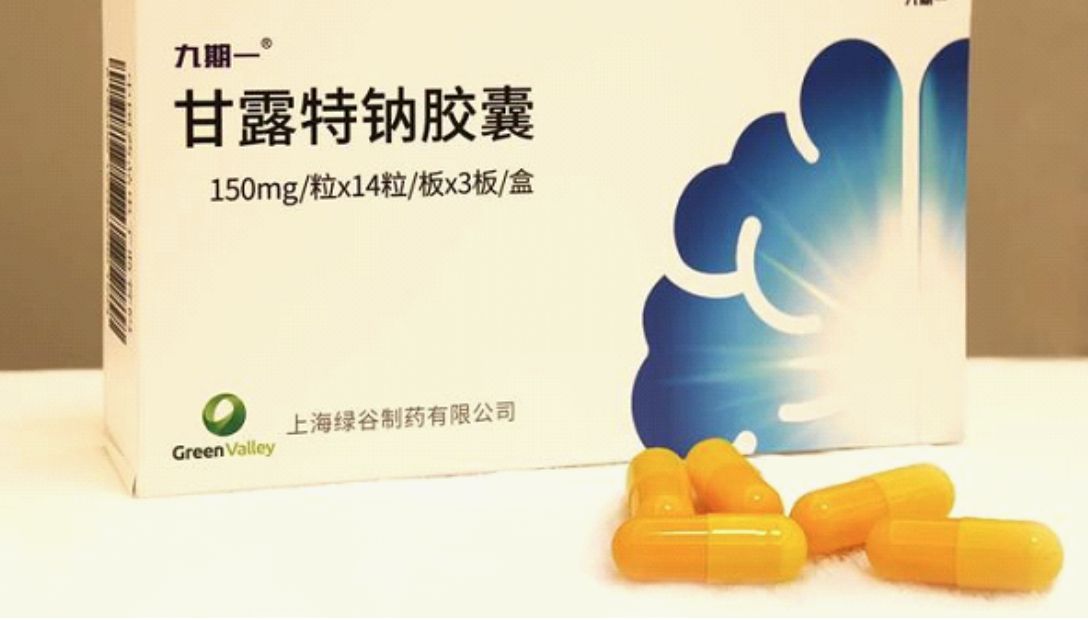
The moment the ball goes in is always exhilarating! For innovators it is self-fulfilment after tireless searching; for the public it is enormous benefit. Last Saturday evening, as soon as news broke that GV-971, an original new drug for Alzheimer’s disease, had been approved for the market, it flooded social media. The day after tomorrow, the drug will officially go into production in Zhangjiang. Chen Kaixian, an academician of the Chinese Academy of Sciences, says this is a landmark! China’s biopharmaceutical industry is striding into the era of original innovation:
Chen Kaixian: “971 shows the original innovation contribution of Chinese scientists; in terms of the drug’s mechanism of action and other aspects it has broken through previous international understanding. This is also a major landmark achievement of the national major science and technology project in new drug research.”
Behind the final kick lies the “midfield launch” of strategic layout and the “all-out assist” of the innovation system and hardware facilities. A group of big science facilities that are among the world’s very best has settled in Shanghai and is constantly being upgraded. Within this year, the soft X-ray facility, the ultraintense ultrafast laser facility and the live cell imaging platform are all expected to be put into use. Wang Jianyu, director of the Shanghai Branch of the Chinese Academy of Sciences, says that big science facilities are moving from “fighting alone” to “pooling their strength”, which will form a powerful innovation magnet:
Wang Jianyu: “There must be some scientific and technological achievements with international influence that depend on the long-term development of our basic research. Our academy has already concentrated its strongest forces in the Zhangjiang area, and we hope we can make a good final kick.”
Aiming at the global frontier, courageously shouldering national strategies. On the one hand, Shanghai is committed to original innovation in basic scientific research; at the same time, in applied fields it focuses on key core technologies and makes an all-out effort. At the beginning of this year, China’s first “5G + AI” full-scenario commercial demonstration zone — Zhangjiang Artificial Intelligence Island — officially opened, and top AI companies and research institutions up and down the value chain, such as IBM, Microsoft and Tongji University, moved in one after another. The Shanghai Integrated Circuit Design Industrial Park likewise went on the offensive from the very start. He Dajun, general manager of Zhangjiang Hi-Tech, says that the three-square-kilometre planned area will gather a thousand enterprises and a hundred thousand talents, forming a sales scale of a hundred billion yuan and becoming an important landmark of “Made in Shanghai”:
He Dajun: “Our intention is to use design to lead the entire industrial chain and to solve the bottleneck technologies constraining our country’s development. We hope to complete a design park that is leading in China and first-class internationally by 2025.”
Standing high lets one see far — and also expand one’s circle of innovation friends. At the second World Laureates Forum held last week, a science “dream team” led by 44 Nobel laureates engaged in a series of sparkling collisions of ideas on the shore of Dishui Lake in Lingang. Unlike the fleeting visits of the past, more and more “wisdom brains” choose to “come often” and even to “stay”. Roger Kornberg, chairman of the World Laureates Association, is full of praise for Shanghai’s concentration of innovation:
Roger Kornberg: “China has already contributed many outstanding achievements — in Shanghai, for example, cloned monkeys and artificial single-chromosome eukaryotic cells were born, which lets one feel Shanghai’s innovative vitality.”
Strengthening the sourcing function of science and technology innovation depends, crucially, on people! Early this year, Shanghai launched the “25 Measures for Science and Technology Reform”, which, by delegating power from government and loosening institutional constraints, fully energizes all kinds of innovation actors and empowers innovation. Liu Yan, secretary of the Municipal Science and Technology Party Committee, says that by focusing on key areas and driving on two wheels, innovation will surely become the key driving force supporting Shanghai’s future development:
Liu Yan: “Focusing on integrated circuits, artificial intelligence and biomedicine, we will greatly enhance our capacity for innovation sourcing and our ability to turn scientific and technological achievements into new drivers of development. Science and technology innovation and institutional and mechanism innovation must be driven on two wheels; through institutional and mechanism innovation we will greatly unleash our innovation potential and advance the building of the science and technology innovation center.”
From November 2 to 3, General Secretary Xi Jinping inspected Shanghai and once again asked Shanghai to strengthen its capacity for science and technology innovation sourcing. Facing these earnest instructions, Shanghai will go all out and increasingly become the first discoverer of scientific laws, the first creator of technological inventions, the first pioneer of innovative industries and the first practitioner of innovative concepts.